Crested gecko
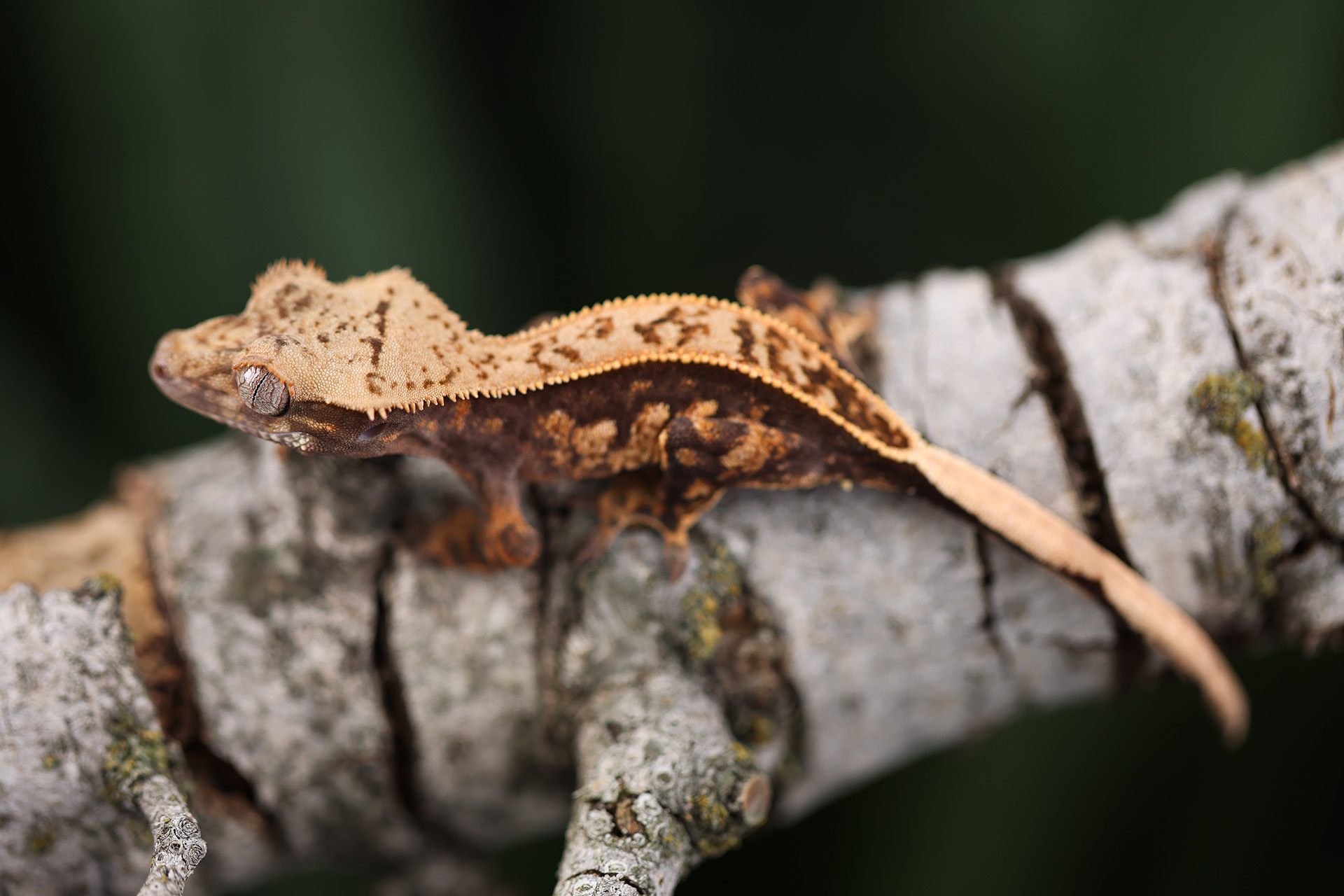
Correlophus ciliatus. Rediscovered in 1994 after seven decades thought extinct. The crested gecko is now one of the most kept reptiles in the world.
- Origin
- New Caledonia
- Adult Size
- 8 to 9 inches total length, 45 to 60g+
- Lifespan
- 15 to 20 years in good care
- Difficulty
- Beginner
- Temperature
- 72 to 78°F
- Humidity
- 40 to 90% (cycled)
- Reproduction
- 2 eggs every 25 to 40 days
- Diet
- Frugivorous, complete powdered diet
Crested geckos hold an unusual place in the reptile hobby. They were considered extinct for nearly seventy years before being rediscovered on the islands of New Caledonia in 1994. Within two decades, they became one of the most-kept reptiles in the world.
That trajectory says something useful about why they belong in any serious overview of the hobby. They’re approachable enough that beginners succeed with them, but rich enough genetically and aesthetically that experienced breeders make careers out of them. Few species manage both.
Discovery and rediscovery
The species was first described in 1866 by the French zoologist Alphonse Guichenot, who placed it in the genus Correlophus and gave it the specific epithet ciliatus, from the Latin for “fringed” or “eyelashed,” in reference to the prominent crests above the eyes and along the sides of the head.
After the original 19th-century records, sightings became increasingly rare, and by the early 20th century the crested gecko had effectively vanished from the scientific record. For most of the following decades it was presumed extinct, a casualty of the habitat loss and introduced predators that have shaped reptile populations across New Caledonia.
The species was rediscovered in 1994 by a team that included the German herpetologist Robert Seipp, working in the southern part of New Caledonia after tropical storm activity. The animals are sometimes described as a Lazarus species, a term applied to organisms believed extinct that later reappear. A limited number of crested geckos were exported in the years following rediscovery, and most animals in captivity today descend from those founders.

Husbandry at a glance
Crested geckos are arboreal, nocturnal, and primarily frugivorous. Adults reach 8 to 9 inches in total length and live 15 to 20 years in good care. They’re tropical but tolerant. Most keepers maintain them at 72 to 78°F with no supplemental heat in moderate climates.
The species’ commercial appeal is partly about that simplicity. There’s no UVB requirement, though some research suggests benefit. No live insect feeding is required either, since complete powdered diets (pioneered by Allen Repashy in the early 2000s) have effectively replaced the previous fruit-and-cricket regimen. They tolerate handling well by gecko standards. They’re quiet, odorless, and content in vertical enclosures the size of a small bookshelf.
Why crested geckos matter to the hobby
First, accessibility. The combination of forgiving care requirements and broad availability means crested geckos are often a keeper’s first reptile. That makes them the hobby’s primary entry point, and it means the species community has a disproportionate influence on how new keepers form their early opinions about reptile keeping more generally.
Second, genetic diversity. Despite a small founder population (most captive cresteds descend from a handful of animals collected in the 1990s), the species displays remarkable phenotypic variation. Color, pattern, structure, and dorsal expression all vary widely, and many traits appear to be polygenic rather than simple Mendelian. This makes crested gecko breeding more art than algebra in many cases.
Third, active morph development. New visual phenotypes continue to emerge from the breeder community: Lily Whites, Axanthics, Cappuccino patterns, partial pinstripes. Few hobby reptiles have a development trajectory this active two decades into captive breeding.
Care highlights
Newer keepers tend to make the same handful of mistakes.
Over-heating is the most common one. Cresteds are not desert species and don’t tolerate heat well. Sustained exposure above 82°F is stressful, and above 85°F it becomes dangerous. Most homes don’t need a heat source for cresteds at all.
Under-misting is the second. Humidity should cycle from saturated (90% or more) at night to drying out (40 to 50%) during the day. Constant high humidity invites respiratory infections, and constant low humidity prevents proper shedding.
Cohabitation problems are the third. Adult males will fight, sometimes lethally. Even adult females can become incompatible with each other. The default for cresteds is single-housed adults, with breeding pairs introduced briefly.
Breeding notes
Crested geckos breed prolifically given correct conditions. A receptive female will produce eggs roughly every 25 to 40 days, often for 8 to 10 cycles before taking a winter break. Eggs incubate for 60 to 120 days at 72 to 76°F, with cooler temperatures producing longer incubation and (anecdotally) more robust hatchlings.
Calcium burden. Reproductive females deplete their calcium reserves rapidly. Keepers planning to breed should confirm their feeding regimen provides adequate calcium intake, including a separate calcium dish in the enclosure. Otherwise, MBD (metabolic bone disease) progression in breeding females can be severe.
Mating-induced stress. Male crested geckos can be persistent breeders, sometimes to the female’s detriment. Many experienced breeders rotate males in and out of female enclosures rather than keeping them paired continuously, allowing females recovery time between breeding events.
The morph landscape
Crested gecko genetics has become a serious technical field. Some traits behave predictably. Lily White is co-dominant. Axanthic is recessive. Patternless and structural traits are largely polygenic. Many of the visible characteristics breeders care about, including base coloration, fire-up intensity, and dorsal pattern type, do not follow simple inheritance and require multi-generation projects to establish reliably.
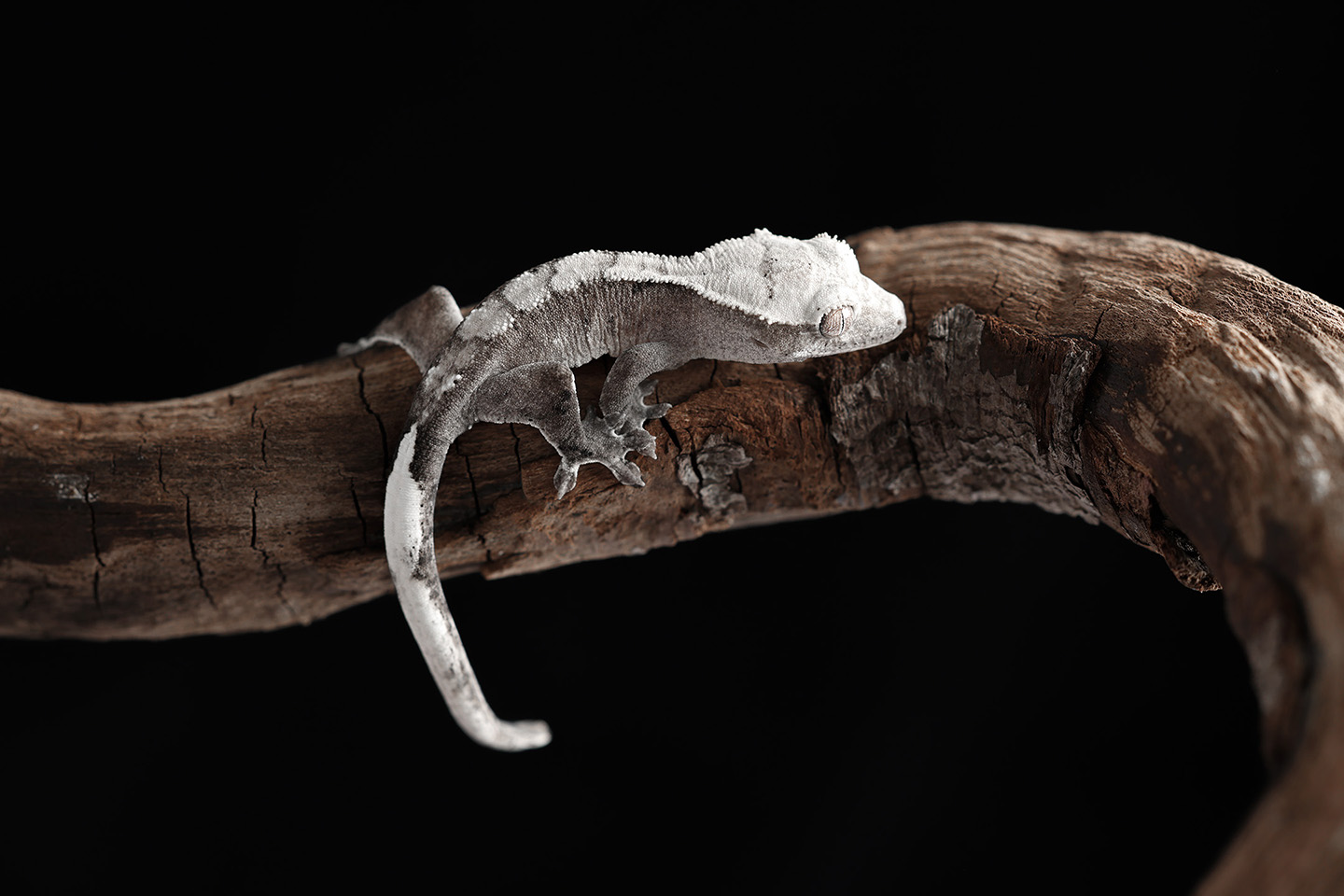
Two axes of variation account for most named morphs. The first is color: the base tone of the animal, ranging from cream and yellow through orange, red, olive, brown, and the cooler gray tones produced by reduced pigmentation. The second is pattern: the arrangement of markings across the dorsal surface and flanks. Pinstripe describes a clean dorsal line; tiger and brindle describe banding; dalmatian describes spotting; harlequin describes extensive lateral patterning that climbs into the dorsal area. Most morphs in the hobby are a combination of a color line and a pattern type, and the two inherit somewhat independently of one another.
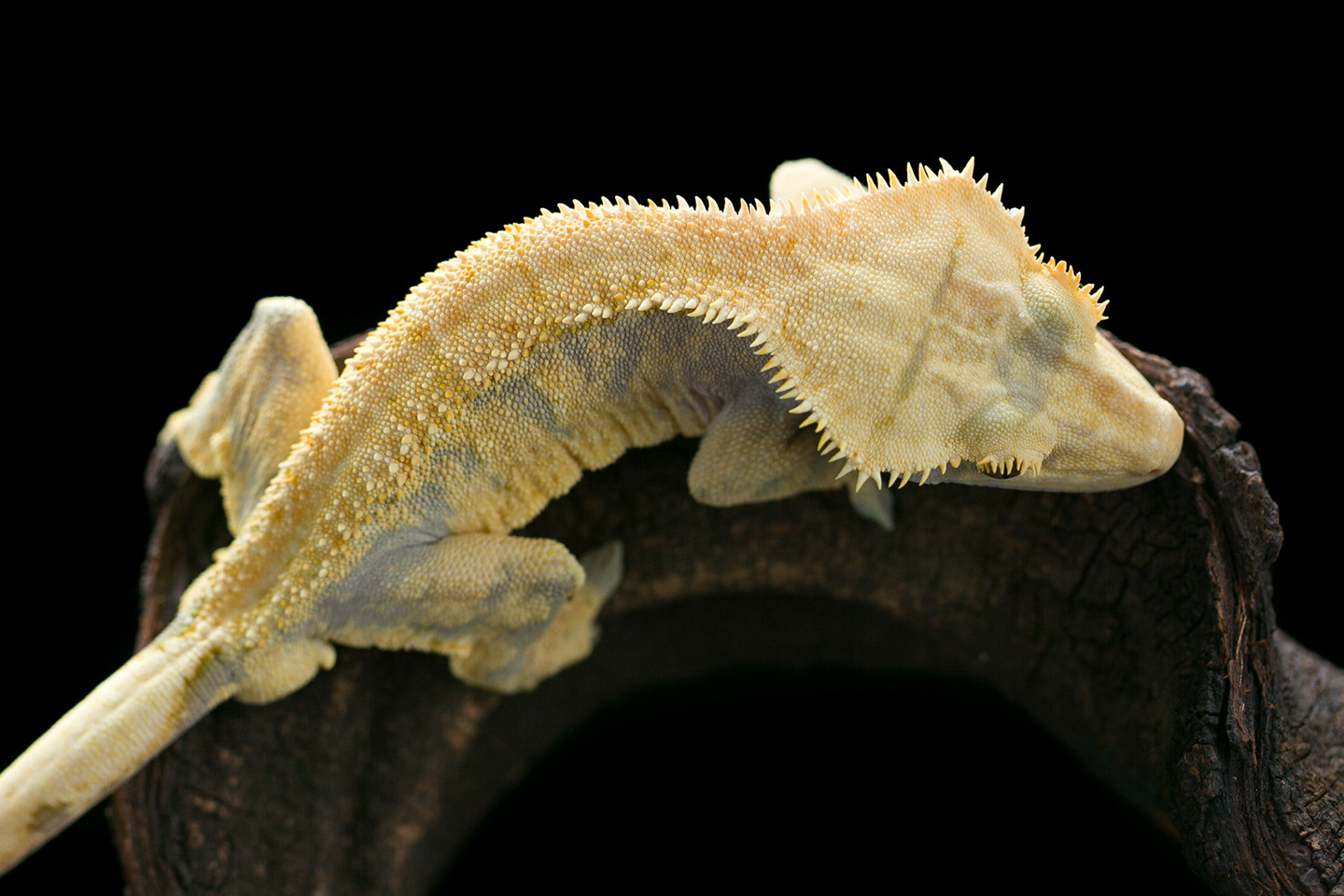
For breeders new to the species, two practical points are worth taking seriously. Pair conservatively, meaning do not combine traits speculatively until you understand each one alone, and document everything. The hobby has gained substantially when breeders have published their findings, and it has lost ground when they have not.
“Crested gecko breeding is more art than algebra in many cases.”
Wild populations today
Although crested geckos are now abundant in captivity, wild populations in New Caledonia remain comparatively limited and continue to face ongoing pressure. Habitat loss from development and clearing has reduced the available range, and introduced rats and feral cats prey on adults and eggs. The little fire ant (Wasmannia auropunctata), invasive across parts of the islands, has been documented displacing native reptile fauna and is regarded as one of the more serious recent threats.
The IUCN currently lists Correlophus ciliatus as Vulnerable. The contrast between the species’s position in the hobby and its position in the wild is a recurring theme in modern herpetological writing on New Caledonia.